Heat pump installation cost in Doylestown depends on the equipment your home needs, how heat reaches each room, and the electrical and installation work required. For a 2026 replacement, compare the complete installed scope—not just the outdoor unit—and treat any instant quote as a preliminary estimate until the office confirms it.
- Heat pump installation cost depends on equipment sizing, ductwork, electrical work, backup heat, and installation scope.
- Homecomfortquote suits homeowners seeking preliminary HVAC pricing and no-pressure advice before choosing a replacement.
- Compare ducted, ductless, and dual-fuel arrangements by fit and required work—not equipment alone.
- Ask for written inclusions, exclusions, and office confirmation before treating an instant quote as final.
What affects heat pump installation cost in Doylestown?
Your home's requirements and the work included in the proposal determine the installed cost. Two proposals can describe heat pumps yet cover substantially different jobs: one replaces equipment connected to usable ducts, while another includes duct repairs, electrical changes, and a different backup-heating arrangement.
Homecomfortquote provides online instant quotes for residential HVAC work. Those figures are preliminary estimates confirmed by the office, not binding final prices. That distinction matters when your home's existing equipment and installation conditions still need review.
Start by identifying which general arrangement each proposal describes. These are system choices to discuss, not a statement that every arrangement is offered for every property.
| System arrangement | Best for | Main advantage | Main drawback | Installation questions |
|---|---|---|---|---|
| Ducted heat pump | Homes with suitable existing ducts | Uses a central air-distribution system | Leaky or unsuitable ducts need attention | Can the existing ducts handle the planned airflow? |
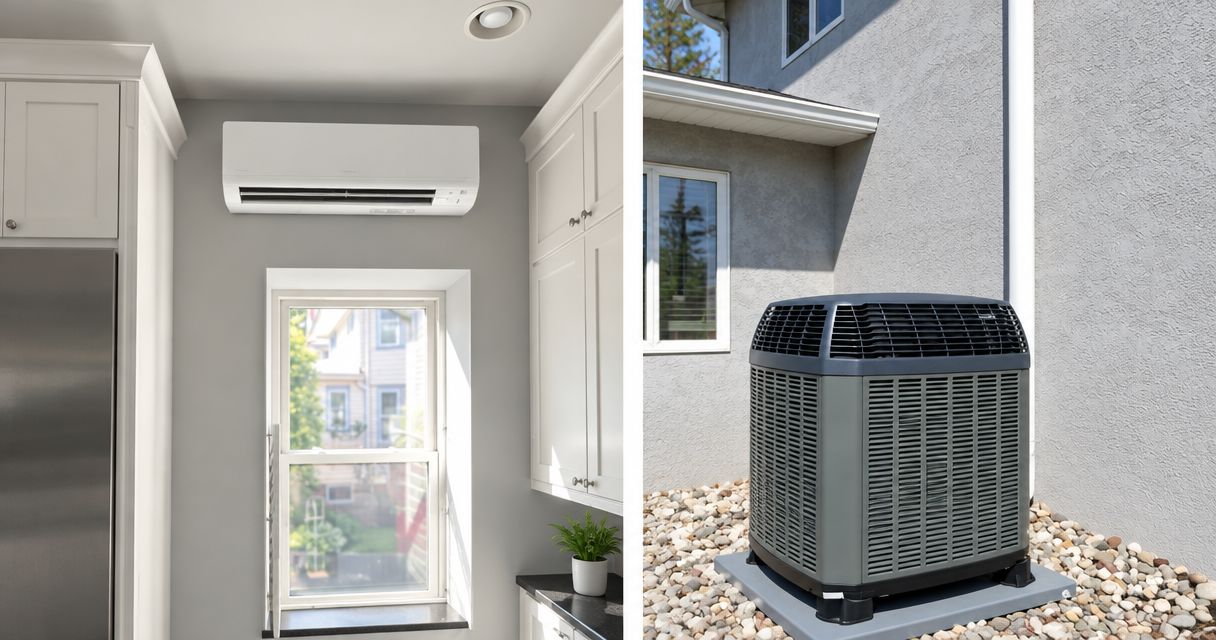
| Ductless heat pump | Spaces without suitable ducts or rooms needing separate control | Avoids adding a conventional duct network | Indoor units and refrigerant routes need suitable locations | Which rooms are included, and where will equipment go? |
| Dual-fuel arrangement | Homeowners who want a heat pump paired with fuel-burning backup heat | Allows different heating sources to serve the home | Adds equipment and control decisions | What equipment stays, and how will the controls switch heating sources? |
The lowest equipment figure does not necessarily describe the least expensive completed job. Compare the work required to deliver the same rooms, comfort goals, and heating coverage.
Why this matters
A replacement decision involves more than choosing a box outside. You are also deciding whether to keep existing ducts, how to handle colder-weather heating, and whether the current electrical setup suits the proposed equipment.
For homeowners in Doylestown and New Hope, the useful question is not whether a neighbor paid less. It is whether both projects included comparable work. The same comparison applies across Bucks, Lehigh, and Montgomery counties: an address alone does not establish what your installation requires.
For a 2026 purchase, ask for the proposed equipment and installation scope in writing before comparing totals. That gives you something concrete to discuss without a pushy sales conversation.
Ducted heat pumps: Check the ducts before comparing equipment
A ducted heat pump sends conditioned air through a central duct system. Existing ducts can simplify a replacement, but their presence does not establish that they are suitable for the new equipment.
Ask whether the proposal includes an assessment of airflow, duct condition, and return-air paths. A room that already struggles to stay comfortable deserves attention before the equipment is replaced. New machinery does not repair a disconnected duct or create a missing return-air path.
The advantage is straightforward: suitable ducts let you use an existing distribution system. The limitation is equally important: duct repairs or changes add work beyond swapping equipment.
Best for: homeowners whose existing ducts can support the planned system. Ask the installer to separate equipment replacement from any proposed duct modifications so you understand what each part addresses.
Ductless heat pumps: Count the spaces, not just the outdoor unit
Ductless systems deliver conditioned air through indoor units rather than a conventional central duct network. Installation scope depends on which rooms you want served, indoor-unit placement, and the routes connecting indoor and outdoor equipment.
A proposal for an addition is not equivalent to a proposal covering the whole house. Ask the installer to name the rooms included and explain how spaces without an indoor unit will receive heating and cooling.
The advantage is avoiding a new conventional duct network where one is not suitable. The drawback is that indoor units occupy visible locations, and piping, drainage, and electrical connections still need planned routes.
Best for: homeowners addressing spaces without suitable ducts or seeking separate room control. Do not assume that a hallway unit provides the same coverage as equipment specifically planned for closed bedrooms.
Dual-fuel arrangements: Define the backup-heating plan
A dual-fuel arrangement pairs a heat pump with fuel-burning heating equipment. The installation decision includes both the equipment and the controls that determine which heating source operates.
Ask whether existing heating equipment will remain, whether it is compatible with the proposed setup, and what control changes are included. Keeping an existing furnace is a different scope from replacing both heating sources.
The benefit is having different heating sources available within the planned system. The drawback is a more involved equipment and controls discussion, including responsibility for maintaining the equipment that stays.
Best for: homeowners who want a heat pump with fuel-burning backup heat. Have the installer explain the operating plan in everyday language, including what happens when outdoor conditions change.
Why heat pump installation cost varies
These factors explain why a general equipment quote is not the same as a confirmed installed proposal. Ask which ones apply to your home rather than assuming every project needs every type of work.
- Home heating needs. Equipment selection should reflect the home's heating and cooling requirements. Insulation, windows, air leakage, and room layout affect those requirements; floor area alone does not describe the whole job.
- Equipment choice. Capacity, efficiency, and operating features influence the equipment selected. Compare specific models rather than assuming every heat pump delivers the same performance.
- Air distribution. Duct repairs, return-air changes, or additional indoor units change the installation scope. Ask what is included and what remains untouched.
- Electrical work. The proposed equipment has electrical requirements that must be checked against the home's existing circuits and electrical system. Ask whether any required changes are included.
- Backup heat and controls. Electric backup heat and fuel-burning backup involve different equipment and control decisions. The proposal should explain the intended arrangement.
- Site work and completion. Equipment access, outdoor placement, piping routes, drainage, removal, required permits, and startup work belong in the scope discussion. Ask which items the installer is responsible for completing.
A useful 2026 proposal connects each recommended change to a reason. If a line item is unclear, ask what problem it solves and whether it is required for the proposed installation.
How do you compare heat pump installation quotes?
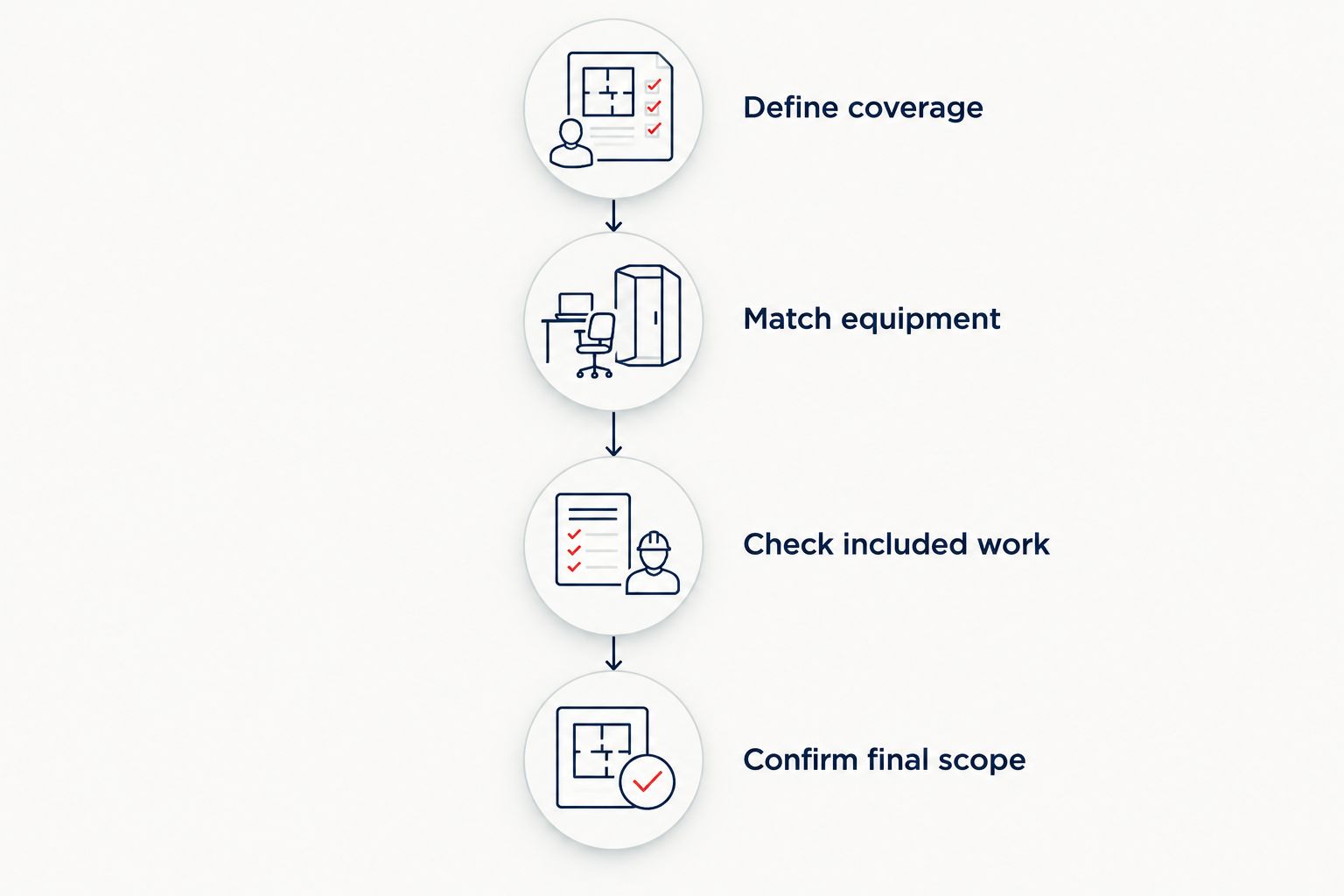
Compare heat pump installation quotes by matching the equipment, rooms served, and included work before comparing the totals. Follow this sequence so an omitted task does not look like a saving.
- Define coverage. Write down whether the project covers the whole home, an addition, or selected rooms. Identify comfort problems you want addressed, including rooms that already run hot or cold.
- Match equipment. Request the proposed indoor and outdoor model information. Ask how the capacity was selected and whether a home load calculation supports that choice.
- Check included work. Confirm duct changes, electrical work, controls, piping, drainage, equipment removal, and any required permits. Identify items that are excluded or still subject to assessment.
- Confirm final scope. Ask how the preliminary estimate becomes an office-confirmed proposal. Read the exclusions and understand what additional findings would require a revised scope.
Keep the comparison practical. You do not need to become an HVAC technician; you need clear answers about what is being installed, why it fits your home, and what work the proposal includes.
Ask what happens before the installer leaves
Equipment installation and system startup are separate parts of finishing the job. Ask whether the proposal includes checking operation, setting up controls, and showing you how to use the system.
Also ask what documentation you will receive. Written model information, operating instructions, and a clear description of the completed work help you understand what was installed without relying on memory.
Does a bigger heat pump give you better value?
A bigger heat pump is not automatically better value. Equipment should match the home's calculated requirements; choosing capacity simply because it sounds more powerful is not a substitute for sizing the system.
Ask the installer to explain the sizing method. A recognized residential load-calculation method, such as ACCA Manual J, considers building characteristics rather than treating floor area as the only input.
Oversized equipment can cycle frequently and affect comfort, while undersized equipment can leave heating or cooling needs unmet. Ask for the reason behind the size, not just the size itself.
Is an instant heat pump quote the final installed price?
An instant heat pump quote is a preliminary estimate, not a binding final installed price. Homecomfortquote's office confirms the estimate after the relevant project details are reviewed.
That makes the quote a starting point for deciding whether to explore replacement. It does not remove the need to clarify equipment selection, electrical requirements, duct condition, access, and other installation details.
For a 2026 project, keep a copy of the preliminary estimate alongside the confirmed proposal. Compare the scope as well as the total, and ask for an explanation of any change before approving the work.
Getting useful advice without a sales pitch
Homecomfortquote is best for local homeowners seeking preliminary HVAC pricing and no-pressure replacement advice. HVAC PROZ LLC provides residential installation, repair, and maintenance services in Quakertown and the surrounding Bucks, Lehigh, and Montgomery county areas.
Homecomfortquote's preliminary HVAC quote helps you begin the buying conversation; its limitation is that it does not establish every property-specific requirement. Whether you live in Doylestown, New Hope, or another nearby community, explain what you want replaced and which comfort problems you want solved.
Bring questions rather than a commitment. Ask what can remain, what needs changing, and which decisions affect the completed installation—not just the equipment selection.
Start with a preliminary quote
Explore replacement pricing, then confirm your home's equipment and installation scope with the office.
FAQ
What affects heat pump installation cost most in Doylestown?
Heat pump installation cost depends on equipment selection and the work your home requires. Compare sizing, air distribution, electrical requirements, backup heat, access, and the written installation scope rather than assuming equipment alone determines the total.
Can I reuse my existing ducts with a heat pump?
Existing ducts can be reused when they are suitable for the proposed system. Ask the installer to assess condition and airflow and identify any repairs or changes in the proposal.
Is a ductless heat pump always cheaper to install?
A ductless heat pump is not automatically cheaper to install. The comparison depends on rooms served, indoor units, connection routes, electrical work, and the ductwork a central system would require.
Do I need an electrical panel upgrade for a heat pump?
A heat pump does not automatically require an electrical panel upgrade. The installer needs to check the proposed equipment's requirements against your home's existing electrical system.
Should I keep my furnace when installing a heat pump?
Keeping your furnace is a system-design decision, not an automatic requirement. Ask whether a dual-fuel arrangement suits your home, whether the existing equipment is compatible, and what controls are included.
Is Homecomfortquote's instant quote binding?
Homecomfortquote's instant quote is a preliminary estimate confirmed by the office, not a binding final price. Confirm the equipment, included work, and exclusions before approving an installation.
What should I ask before approving a heat pump replacement in 2026?
Before approving a heat pump replacement in 2026, ask for the equipment details, sizing explanation, included work, exclusions, and confirmation of the preliminary estimate. Make sure the proposal identifies the rooms served and the backup-heating plan.
One last thing
Ask this before signing: What stays exactly as it is? A replacement proposal can describe new equipment clearly while leaving you uncertain about existing ducts, wiring, controls, or backup heat.
Have the installer identify what stays, what changes, and what still needs assessment. That simple request makes the boundary of the job easier to understand—and gives you a clearer basis for comparing heat pump installation cost.