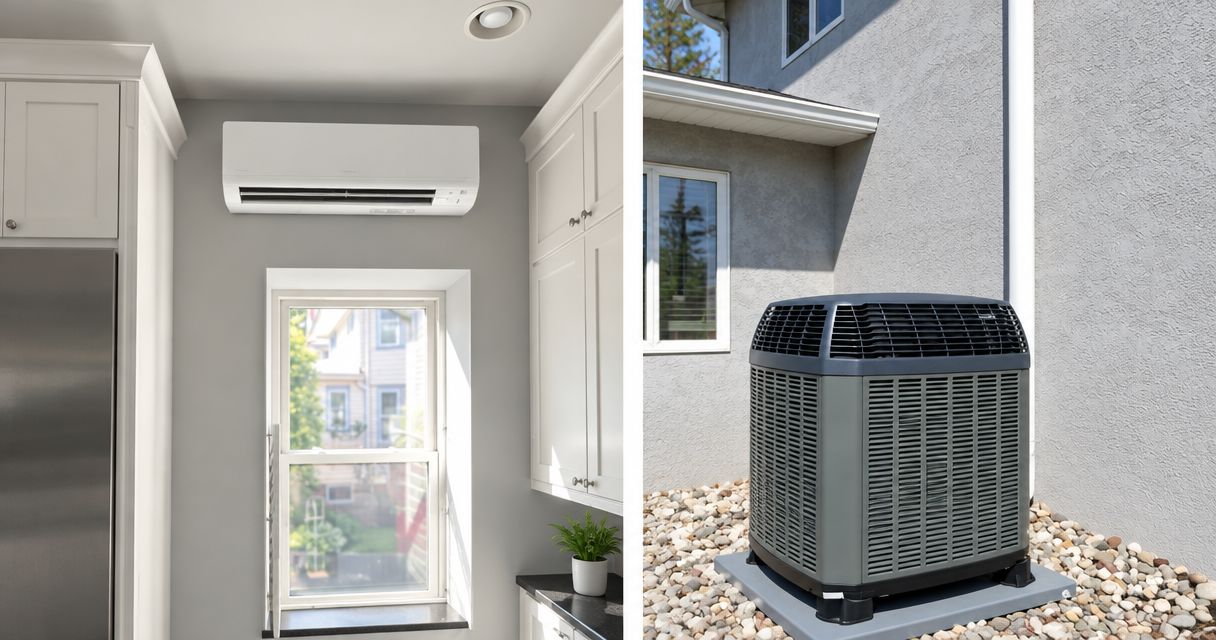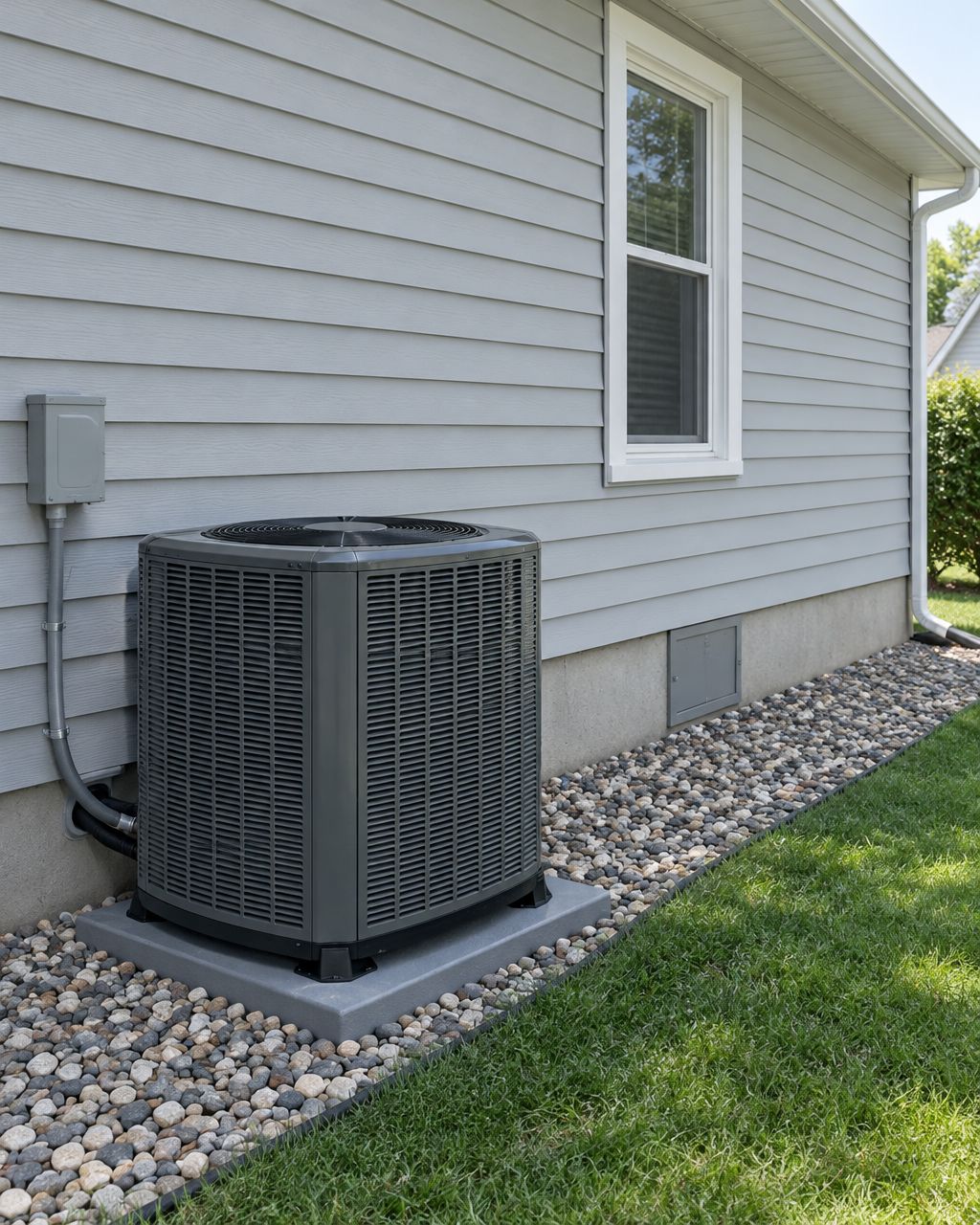
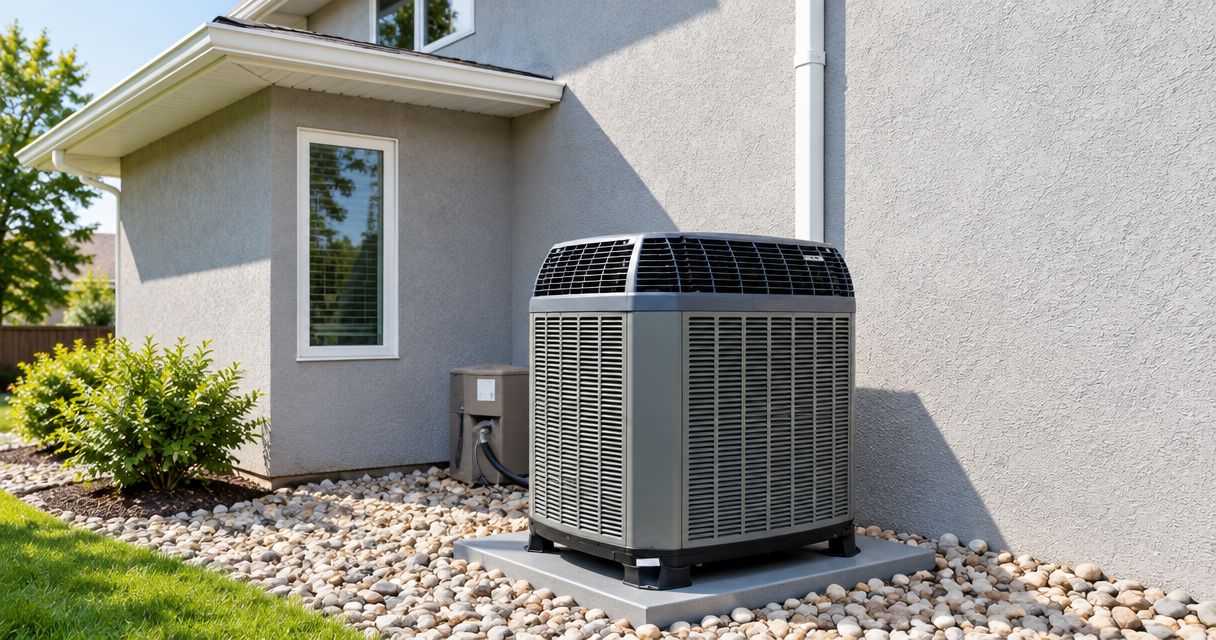
Central air installation cost in New Hope depends on the cooling equipment your home needs, the condition of its ductwork, and the work required to connect and install the system. An equipment-only figure leaves out parts of the job, including electrical changes, drainage, access, and any duct repairs. For a 2026 replacement or first-time installation, compare written scopes of work rather than treating the lowest preliminary estimate as the final installed price.
- Central air installation cost depends on equipment, ductwork, electrical work, drainage, and installation access.
- Compare air conditioning installation quotes with matching equipment and clearly listed work.
- HVAC PROZ LLC suits homeowners who want preliminary HVAC pricing and no-pressure advice.
- An online instant quote is a preliminary estimate confirmed by the office, not a binding final price.
What affects central air installation cost in New Hope?
The biggest distinction is whether you are replacing an existing central air system or adding central air to a home without suitable ducts. Those projects involve different work, even when the outdoor equipment looks similar.
Use this comparison to identify the kind of project you are planning before comparing estimates.
| Installation approach | Best for | Main advantage | Main limitation |
|---|---|---|---|
| Replace equipment and retain suitable ducts | Homes with serviceable, adequately sized ductwork | Keeps usable parts of the existing distribution system | Existing duct problems still need attention |
| Replace equipment and repair ducts | Homes with identified leakage or airflow problems | Addresses equipment and air distribution together | Adds work beyond equipment replacement |
| Add central air and new ducts | Homes without a suitable duct system | Creates a ducted cooling system throughout the planned areas | Requires space for ducts, returns, and installation access |
For a preliminary starting point, Homecomfortquote offers online instant quotes. Treat that figure as an estimate for office confirmation, not a final agreement covering every condition inside your home.
Why this matters
A lower estimate is not automatically a better deal. It can describe a smaller job, different equipment, or fewer corrections to the existing system.
For your 2026 project, put the proposals next to each other and check what each contractor will actually install. A clear explanation of included work is more useful than a confident promise without a written scope.
That applies whether you live in New Hope or Doylestown in Bucks County, or elsewhere in Lehigh or Montgomery County. Your address identifies the project location; your home's equipment, layout, and installation conditions determine the work to quote.
Replacing existing central air: check what stays
An existing central air system gives the installer something to inspect, not a reason to assume everything can stay. Ducts, wiring, refrigerant piping, drainage, and indoor equipment connections all need a suitability check.
Ask the contractor to separate retained components from replaced components. That distinction helps you see whether a proposal includes a complete equipment change or depends on reusing parts that have not yet been evaluated.
Keeping usable components can avoid unnecessary replacement work. The drawback is that an unresolved airflow or drainage problem does not disappear just because the outdoor unit is new.
Before approving a replacement, ask which existing components will remain and why they are suitable. Get that answer in the proposal, especially when competing estimates describe noticeably different work.
Adding central air: plan the air distribution first
A home without suitable ducts needs more planning than a straightforward equipment replacement. The installer must establish routes for supply air and return air, along with space for the indoor equipment and necessary connections.
Ask where the ducts will run and what rooms or surfaces the installation will affect. Do not assume that wall, ceiling, or finish repairs are included unless the written scope says so.
New ductwork lets the system serve the planned rooms through a connected distribution network. Its limitation is physical: ducts and equipment need space, and the proposed route must work with the house.
For a 2026 first-time installation, request a walkthrough of the proposed layout before choosing equipment features. A clear route through the home matters more than an attractive equipment description that leaves the installation unresolved.
Why central air installation cost varies
These six parts of the job explain why central air proposals differ. Ask about each one rather than accepting a single total without a breakdown of the work.
- Cooling load: The home's heat gain determines the cooling capacity needed. Windows, insulation, air leakage, and sun exposure affect that assessment.
- Equipment choice: Efficiency, compressor operation, indoor equipment compatibility, and controls change what is being installed.
- Ductwork: Existing ducts need checks for condition, sizing, leakage, and supply and return airflow.
- Electrical work: The installer needs to confirm that the circuit, disconnect, and related connections suit the selected equipment.
- Drainage: The indoor cooling coil produces condensate that needs a suitable drain route and protection where required.
- Installation access: Equipment location, work space, and routes for moving equipment affect how the installation is carried out.
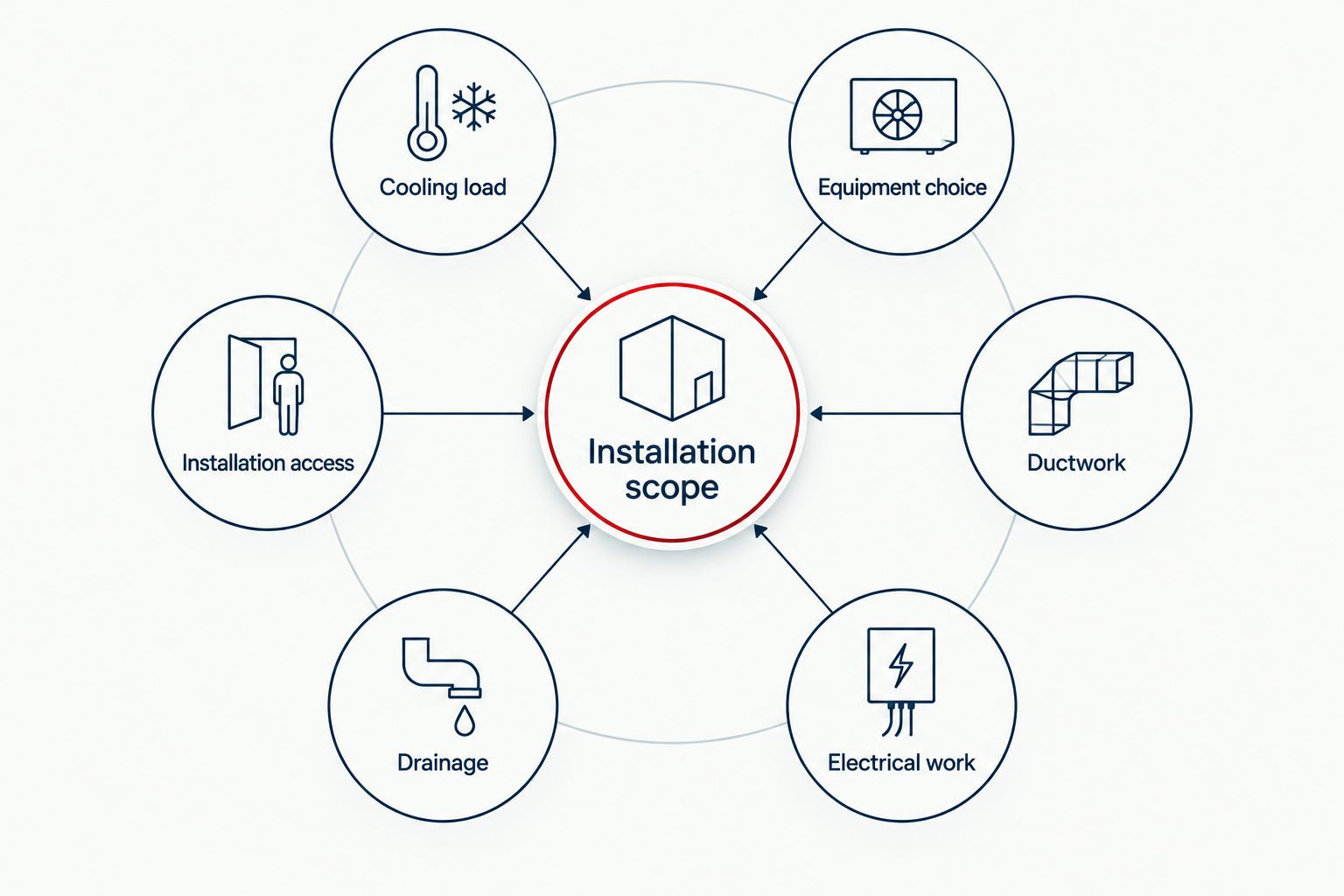
Each factor belongs in the conversation before you accept a final proposal. You do not need to diagnose the system yourself; you need the contractor to explain what was checked and what work the quote includes.
Cooling capacity is not a shortcut to a better system
Air conditioning capacity is commonly expressed in tons. One ton of cooling equals 12,000 BTU per hour; a 2-ton system provides 24,000 BTU per hour, and a 3-ton system provides 36,000 BTU per hour. These are capacity conversions, not recommendations for your home.
A larger unit is not automatically the right choice. Equipment that is oversized for the home's cooling load can run in short cycles and provide less effective humidity control.
Ask for a cooling-load calculation rather than a size chosen only from floor area or the old unit's label. If the home has changed through insulation work, window replacement, or an addition, make sure that information reaches the person selecting the equipment.
Equipment features need an everyday explanation
Ask what a proposed equipment feature changes for you: temperature control, humidity management, operating efficiency, or sound. A list of model numbers alone does not explain whether the choice fits your priorities.
Efficiency ratings describe equipment performance under specified test conditions. They do not establish your household's future utility bill, which also depends on weather, thermostat settings, the house, and installation quality.
Request the exact outdoor and indoor equipment models and the proposed thermostat. That makes a 2026 quote easier to compare and keeps a general equipment description from standing in for a defined system.
Duct condition deserves its own decision
Rooms that are difficult to cool deserve investigation before replacement equipment is selected. Possible causes include air distribution problems and differences in room heat gain; a larger outdoor unit is not a diagnosis.
Ask what the installer found and which corrections are included. If duct repairs are recommended, request a plain explanation of their purpose rather than an unexplained extra line on the proposal.
Keep serviceable ducts when they suit the new system; address identified problems rather than assuming replacement equipment will solve them. This separates necessary work from changes without a clear reason.
How do you compare central air installation quotes fairly?
Compare the same project before comparing the totals. A proposal that includes duct corrections and electrical work is not equivalent to one that covers equipment replacement alone.
Follow this sequence when reviewing your 2026 proposals:
- Match the scope. Identify whether each proposal covers replacement only, duct repairs, or a new duct installation.
- Match the equipment. Check the proposed capacity, outdoor unit, indoor equipment, and thermostat rather than comparing brand names alone.
- Check the connections. Ask what happens to existing refrigerant piping, electrical connections, drainage, and equipment supports.
- Check the exclusions. Identify any permits, finish repairs, disposal, or other work that is excluded or handled separately.
- Confirm the final proposal. Resolve assumptions and changes before authorizing the installation.
Keep questions specific. Instead of asking whether everything is included, ask whether the proposal includes the electrical changes identified during the assessment or the duct repair discussed during the visit.
A useful answer names the work and points to the written scope. If an item remains undecided, ask how it will be resolved before you approve the job.
Is an online central air quote a final installed price?
An online instant quote is a preliminary estimate, not a binding final installed price. It gives you a starting point for planning, while the office confirms the project details and the work required.
HVAC PROZ LLC's residential HVAC quote process should be understood in that order: preliminary pricing first, confirmation before commitment. Do not treat an initial figure as proof that electrical changes, duct repairs, or finish work are included.
When you request an estimate, describe what you know about the existing system and the installation location. Mention rooms that do not cool well, previous additions, and whether the home already has ducts.
You do not need to guess at technical details. Accurate information about the house is more useful than selecting an equipment size yourself and asking a contractor to install it without checking the load.
Should you replace the indoor equipment too?
The indoor and outdoor equipment must be suitable for the proposed system. Whether existing indoor equipment can remain depends on its compatibility and condition, not simply on whether it still operates.
Ask the contractor to explain the proposed combination. If the quote includes replacing additional equipment, the explanation should distinguish necessary compatibility work from a separate recommendation to replace aging components.
Replacing more equipment expands the project; retaining suitable equipment avoids replacing it unnecessarily. Neither approach is automatically right for every New Hope home, so insist on a reason tied to your installation.
What should you tell the contractor before an assessment?
Give the contractor a short description of how the home feels during hot weather. Note rooms that stay warm, humidity concerns, unusual system behavior, and any recent changes to the house.
Also identify access restrictions, such as a tight equipment space or a finished area around existing ducts. These details help focus the assessment without asking you to make technical judgments.
For homeowners in New Hope, Doylestown, Quakertown, and the surrounding Bucks, Lehigh, and Montgomery county areas, the same principle applies: explain the home you have, not just the equipment you want. HVAC PROZ LLC provides residential HVAC installation, repair, and maintenance services in the stated service area.
FAQ
What affects central air installation cost most in New Hope?
Central air installation cost depends on the required equipment and the installation work your home needs. Duct condition, electrical connections, drainage, and access all belong in the scope review.
Can I get a final central air installation price online?
An online instant quote is a preliminary estimate, not a binding final installed price. The office confirms the project details before you treat it as a final proposal.
Is replacing central air the same job as adding it for the first time?
Replacing central air and adding it for the first time are different installation scopes. A home without suitable ducts needs an air distribution plan as well as cooling equipment.
Will a bigger air conditioner cool my house better?
A bigger air conditioner is not automatically better for your home. Select capacity from the cooling load; oversized equipment can short-cycle and provide less effective humidity control.
Do I have to replace all my ducts with a new air conditioner?
New air conditioning equipment does not automatically require replacing every duct. The installer should check whether the existing ducts are serviceable and suitable for the proposed system.
What should I ask when one installation quote is lower?
Ask whether both quotes include the same equipment and installation work. Check duct repairs, electrical changes, drainage, exclusions, and the exact indoor and outdoor equipment models.
Who is HVAC PROZ LLC a good fit for?
HVAC PROZ LLC is a good fit for homeowners seeking preliminary residential HVAC pricing and no-pressure advice. Its online instant quote remains an estimate confirmed by the office, not a binding final price.
One last thing
Before signing a 2026 installation proposal, ask one question: What existing problem in my home will this replacement leave unchanged? It is a useful way to bring overlooked duct, airflow, drainage, or comfort concerns back into the discussion.
A new outdoor unit is visible. The work that makes the whole system fit your home is less obvious, so make sure the written proposal explains it before installation begins.